Your brand could rank #1 on Google and still be completely invisible in AI search.
When a buyer asks ChatGPT “What’s the best project management tool for startups?” or asks Perplexity “Which cybersecurity platform should I use in 2026?” — they don’t get ten blue links. They get a confident, named recommendation. If your brand isn’t in that answer, you weren’t outranked. You were never in the room.
That’s the gap LLM tracking tools exist to close. They tell you exactly where your brand stands across AI search engines — and what to do about it.
In this guide, we break down the best LLM tracking tools in 2026, starting with RankLLM — the AI search visibility platform built specifically for tracking and improving brand citations across ChatGPT, Gemini, Claude, and Perplexity.
What Are LLM Tracking Tools?
LLM tracking tools monitor how and where your brand appears in AI-generated answers. Instead of checking keyword rankings on Google, these tools run targeted prompts through AI engines and measure:
- Whether your brand is mentioned or cited
- Your average position among named competitors
- Sentiment expressed around your brand
- Which sources AI engines are citing when they mention you
- Your share of voice vs. competitors
Think of it as rank tracking — but for the AI search era. As AI Overviews now appear in nearly half of all Google searches, and with ChatGPT surpassing 900 million weekly users, traditional rank trackers can’t tell the full story anymore.
Why LLM Tracking Matters in 2026
“A brand can hold the number-one Google ranking for a keyword and still be completely invisible to AI engines answering the same question.”
— RankLLM, How to Get Cited in AI Search (2026)
AI engines don’t pull from Google’s index. They draw from their own trained set of trusted sources — “best of” listicles, comparison articles, buyer’s guides, expert roundups. If you’re not in those sources, you don’t appear in AI answers, period.
LLM tracking gives you the data to:
- Know exactly which AI engines are (or aren’t) citing you
- Identify the third-party pages driving those citations
- Benchmark your citation share vs. competitors
- Measure the impact of your GEO (Generative Engine Optimization) efforts over time
Quick Comparison: Best LLM Tracking Tools 2026
| Tool | Best For | AI Platforms | Starting Price |
|---|---|---|---|
| RankLLM | AI citation tracking + GEO strategy | ChatGPT, Gemini, Claude, Perplexity | Free trial available |
| SE Ranking | SEO + LLM tracking combined | AI Overviews, AI Mode, ChatGPT, Gemini, Perplexity | $129/month |
| Profound | Enterprise-grade LLM monitoring | ChatGPT, Perplexity, Claude, Gemini, Copilot, Grok + more | $99/month (ChatGPT only) |
| Peec AI | Lightweight brand monitoring | ChatGPT, Perplexity, AIO, AI Mode, Gemini, Copilot | $95/month |
| Otterly AI | Budget-friendly LLM monitoring | ChatGPT, AIO, Perplexity, Copilot, AI Mode, Gemini | $29/month |
| Semrush | Enterprise AI analytics | ChatGPT, AIO, AI Mode, Gemini, Perplexity | $99/month/domain |
| Writesonic | All-in-one GEO + content | ChatGPT, Perplexity, AIO, Claude, Gemini, Copilot, Grok | $249/month |
| Ahrefs Brand Radar | Backlink-integrated AI visibility | AIO, AI Mode, ChatGPT, Perplexity, Copilot | $199/month (1 engine) |
| LLMrefs | Affordable multi-engine tracking | AIO, ChatGPT, Perplexity, Claude, Copilot, Meta AI, Grok + more | €79/month |
| Surfer SEO | AI tracking + content optimization | ChatGPT, AIO, AI Mode, Gemini, Perplexity | $119/month |
1. RankLLM — Best for AI Citation Tracking & GEO Strategy
RankLLM is built from the ground up for one purpose: helping brands understand and improve how they appear in AI-generated search answers. Unlike tools that bolt AI tracking onto a traditional SEO suite, RankLLM is native to the GEO era.
The platform tracks your brand’s citations across ChatGPT, Gemini, Claude, and Perplexity — the four engines that now handle the majority of AI-assisted commercial queries. It doesn’t just tell you if you’re being cited; it shows you where those citations come from and what you can do to earn more.
What Makes RankLLM Different
Most LLM tracking tools stop at “here’s your mention count.” RankLLM goes further by mapping the exact third-party pages AI engines are using to form recommendations in your category — so you can focus your GEO outreach on pages that actually matter.
As the RankLLM team explains in their AI Citation guide:
“A mention on a page that AI already cites is worth significantly more than a mention on a page the AI has never encountered. Focus your outreach on pages already inside the trust network.”
Key Features
- Multi-engine citation tracking — ChatGPT, Gemini, Claude, Perplexity
- Citation source mapping — identifies which 3rd-party pages drive your citations
- Competitor citation benchmarking — see who gets cited instead of you, and why
- Citation share tracking — your mentions as a % of total category mentions over time
- AI authority building tools — surfaces live placement opportunities for GEO outreach
- Prompt-based tracking — track the exact conversational queries your buyers use
Pricing
Free trial available. Visit rankllm.link/pricing for current plans.
Pros and Cons
| ✅ Pros | ❌ Cons |
|---|---|
| Purpose-built for GEO, not an SEO add-on | Focused on AI visibility (not a full SEO suite) |
| Citation source mapping is unique | Newer platform vs. legacy SEO tools |
| Tracks all four major AI engines | — |
| Actionable outreach intelligence | — |
Hint line: If your priority is understanding and improving your brand’s AI search visibility specifically, RankLLM is the most focused and actionable tool available. Start free →
2. SE Ranking — Best for SEO + LLM Tracking Combined
SE Ranking combines traditional SEO tools (rank tracking, site audits, keyword research) with a dedicated AI visibility tracker. It monitors citations across AI Overviews, AI Mode, ChatGPT, Gemini, and Perplexity — and its MCP server integration lets you pipe data directly into AI assistants.
A companion product, SE Visible, extends LLM monitoring with deeper citation analysis, prompt research, and sentiment tracking.
Key Features
- AI Results Tracker with daily mention and link tracking
- Full SEO suite alongside AI monitoring
- GA4 integration for traffic context
- Competitor AI visibility benchmarking
- API access for custom reporting
Pricing
- Core: $129/month (2,000 keywords, 100 prompts)
- Growth: $279/month (5,000 keywords, 250 prompts)
- 14-day free trial available
Best for: Teams that want traditional SEO and LLM tracking on a single platform.
3.Profound – monitors up to 10 AI search engines
Profound monitors up to 10 AI search engines — including ChatGPT, Perplexity, Claude, Gemini, Copilot, Grok, Amazon Rufus, Meta AI, and DeepSeek — though the widest coverage is reserved for enterprise plans. Its standout capability is prompt volume estimation, which lets you understand how many users are actually asking the questions you’re tracking.
Pricing
- Starter: $99/month (50 prompts, ChatGPT only)
- Growth: $399/month (100 prompts, ChatGPT + Perplexity + AIO)
- Enterprise: Custom (up to 10 engines)
Best for: Large brands that need deep enterprise-grade monitoring across every major AI engine.
4.Peec – AI keeps things simple
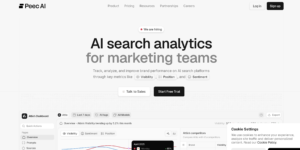
Peec AI keeps things simple: clean UI, daily updates, and prompt suggestions across ChatGPT, Perplexity, AIO, AI Mode, Gemini, and Copilot. Its standout feature is AI-driven strategy insights — for example, it surfaces specific Reddit subreddits where participating could improve your AI citations.
Pricing
- Starter: $95/month (50 prompts, 3 models)
- Pro: $245/month (150 prompts, 3 models)
- Advanced: $495/month (350 prompts, 3 models)
Best for: Brands that want a clean, focused monitoring tool without a steep learning curve.
5. Otterly AI — Best Budget LLM Tracker
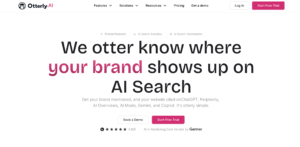
At $29/month for a Lite plan, Otterly is the most accessible entry point into LLM tracking. It covers ChatGPT, Google AI Overviews, Perplexity, and Copilot, with AI Mode and Gemini available as add-ons. Despite the low price, it includes competitor analysis, an AI optimization audit, and a prompt research tool.
Pricing
- Lite: $29/month (15 prompts)
- Standard: $189/month (100 prompts)
- Premium: $489/month (400 prompts)
- 14-day free trial
Best for: Startups and small teams testing the waters of LLM visibility without a large budget.
6. Semrush — Best for Existing Semrush Users
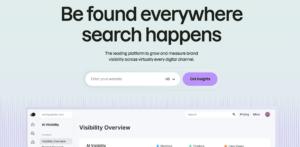
Semrush added an AI Visibility Toolkit that tracks mentions across ChatGPT, Google AI, Gemini, and Perplexity. If you’re already a Semrush customer, the add-on is a natural extension. For new users, the value-to-price ratio is harder to justify compared to dedicated LLM tracking tools.
Pricing
- AI Visibility Toolkit add-on: $99/month per project
- Semrush One Starter: $199/month (50 prompts, includes SEO)
- Enterprise: Custom
Best for: Teams already embedded in the Semrush ecosystem.
7. Writesonic — Best for All-in-One GEO + Content
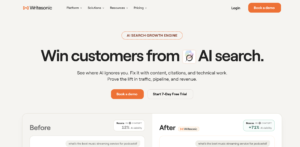
Writesonic covers the broadest set of AI engines on this list: ChatGPT, Perplexity, AIO, AI Mode, Claude, Gemini, Copilot, and Grok (Meta AI and DeepSeek in development). Its actionable insights dashboard is a standout feature — but it’s locked behind an enterprise plan, which makes the regular tiers feel limited for the price.
Pricing
- Basic: $249/month (3 engines, 100 prompts)
- Growth: $499/month (3 engines, 200 prompts)
- Enterprise: Custom (all 8+ engines)
Best for: Content-heavy teams that want GEO tracking and AI writing tools in one platform.
8. Ahrefs Brand Radar — Best for Backlink-Integrated AI Visibility
Brand Radar is an Ahrefs add-on that connects AI visibility data with one of the largest backlink databases in the industry. Unique features include YouTube and Reddit visibility tracking — channels that AI engines frequently cite. Pricing is steep if you’re not already an Ahrefs customer.
Pricing
- $199/month (1 AI engine, organic prompts only)
- $699/month (all engines, 2,500 custom prompt credits)
Best for: Existing Ahrefs users who want to layer AI visibility onto their existing workflow.
9. LLMrefs — Best Affordable Multi-Engine Tracker
LLMrefs tracks mentions across 11 AI platforms — including Claude, Meta AI, Grok, and DeepSeek — at a flat €79/month. It’s one of the most affordable tools with the widest engine coverage, though its analytics depth is lighter than premium alternatives. A Reddit thread finder feature is a useful bonus for GEO outreach.
Pricing
- All-in-one: €79/month (500 prompts, all engines)
- 7-day free trial
Best for: Brands that want broad multi-engine coverage at the lowest price point.
10. Surfer SEO — Best for Content + Tracking Combined
Surfer SEO added AI tracking to its existing content optimization suite. You can monitor brand mentions across ChatGPT, AI Overviews, AI Mode, Gemini, and Perplexity. The limitation: only ChatGPT is available on the Standard plan, and there’s no free trial.
Pricing
- Standard: $119/month (25 weekly prompts, ChatGPT only)
- Pro: $219/month (50 daily prompts, all platforms)
- Enterprise: from $999/month
Best for: Teams whose primary goal is content optimization, with AI tracking as a secondary need.
How to Choose the Right LLM Tracking Tool
| Your Situation | Recommended Tool |
|---|---|
| You want to specifically track and improve AI citations | RankLLM |
| You want SEO + LLM tracking in one platform | SE Ranking |
| You’re an enterprise with complex monitoring needs | Profound |
| You’re on a tight budget | Otterly AI or LLMrefs |
| You already use Semrush or Ahrefs | Their native AI add-ons |
| You need content optimization + AI tracking | Writesonic or Surfer SEO |
API-Based vs. UI-Based LLM Tracking: What’s the Difference?
| API-Based Tracking | UI-Based Tracking | |
|---|---|---|
| Speed | Fast | Slower |
| Data accuracy | Often differs from real user experience | Closer to what users actually see |
| Scalability | High | Lower |
| Rich results | Not captured | Captures shopping snippets and rich features |
| Cost | Lower | Higher |
UI-based tracking produces results closer to what your actual buyers see when they query AI engines. For brand visibility purposes, this makes it the more trustworthy method — even if it comes at a slightly higher price point.
Key Metrics Every LLM Tracker Should Measure
Whatever tool you choose, make sure it tracks these core metrics:
- Citation frequency — how often your brand is named across all target AI engines
- Citation share — your mentions as a percentage of total brand mentions in your category
- Average position — where you appear in AI-generated lists relative to competitors
- Source attribution — which third-party pages are generating the most citations for your brand
- Sentiment — whether AI engines describe your brand positively, neutrally, or negatively
- Competitor gap — which rivals are being cited instead of you, and on which pages
Frequently Asked Questions
What is an LLM tracking tool?
An LLM tracking tool monitors your brand’s visibility inside AI-generated answers from engines like ChatGPT, Gemini, Claude, and Perplexity. It runs your target prompts through these engines and measures whether your brand is cited, how often, where in the answer, and in what context.
Do I still need traditional SEO if I use an LLM tracking tool?
Yes. SEO and GEO (Generative Engine Optimization) are complementary strategies. Traditional SEO builds your organic search baseline; GEO ensures you appear in AI-generated answers that are increasingly replacing traditional search clicks. The brands winning in 2026 run both in parallel.
How long before LLM tracking shows results?
Perplexity uses live retrieval and can surface new placements within days. ChatGPT and Gemini draw from trained associations, so consistent cross-source citation-building typically takes weeks to a few months before generating regular AI citations.
Can I rank #1 on Google and still miss AI citations?
Yes — and this is the critical insight. AI engines source from their own curated trust networks, not from Google’s ranking index. A brand can hold the top Google position and remain invisible in AI answers. That’s exactly why dedicated LLM tracking and a GEO strategy are necessary alongside traditional SEO. Read more about this dynamic →
What’s the best free or low-cost way to start tracking AI citations?
Start with a free trial from RankLLM or Otterly AI. Manually run your top 5–10 buyer prompts through ChatGPT and Perplexity and note which brands are named. That’s your baseline — and it tells you exactly where you stand before investing in automated tracking.
What is GEO (Generative Engine Optimization)?
GEO is the practice of optimizing your brand’s presence so AI engines consistently cite and recommend you in their generated answers. It involves earning mentions on the trusted third-party pages AI engines already source from, structuring your own content for easy AI extraction, and tracking your citation share over time. Full GEO guide →
Final Verdict
The LLM tracking space has matured fast. Every tool on this list does the job of telling you whether your brand appears in AI answers. Where they differ is in depth, strategy, and purpose.
If you want a full SEO suite with AI tracking bolted on, SE Ranking is the strongest all-rounder. If you’re enterprise-level with complex monitoring needs, Profound delivers the coverage. If budget is the priority, Otterly and LLMrefs are solid starting points.
But if your core goal is understanding and systematically improving how AI engines cite your brand — and building a real GEO strategy around that — RankLLM is purpose-built for exactly that outcome.
Ready to see where your brand stands in AI search?
Start your free trial at RankLLM →